
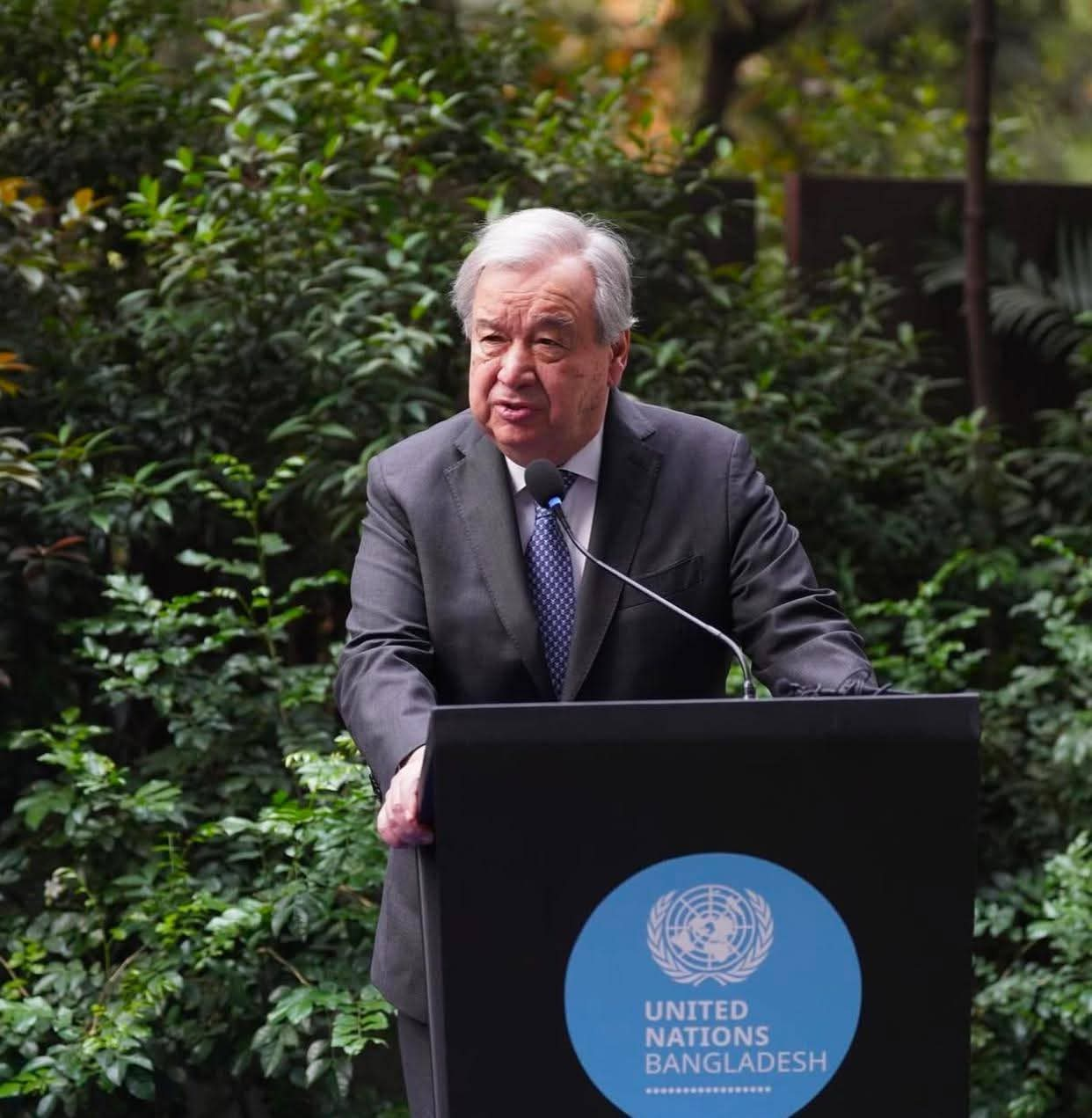
His speech was both a diagnosis of a deeply divided international system and a call to defend multilateralism. From wars and inequality to climate change and artificial intelligence, Guterres warned that “the faultlines in our world are widening” and that “cracks have become canyons.”
A World Where Power Is Changing.
For Guterres, the current crises are not isolated. “These are not separate crises. They are chapters of the same story. The story of power.” He argued that power is being redistributed among states, private corporations and increasingly, machines through artificial intelligence.
Yet global institutions have not kept pace with these transformations. The Secretary-General warned that “our institutions and systems of global governance continue to reflect the power realities and interests of a largely bygone era.” His message is therefore not simply about preserving the existing international order, but about making it more representative and capable of responding to today's challenges.
Africa and the Question of Representation.
This question has a direct African dimension. Guterres described the absence of permanent African representation on the UN Security Council as “indefensible”, highlighting the gap between Africa's importance in the international system and its limited influence in the Council's permanent decision-making structure.
For Africa, reform is therefore about more than institutional symbolism. It concerns the continent's ability to participate more meaningfully in decisions on peace and security, climate finance, development and the rules governing the global economy. As global power becomes increasingly dispersed, African countries are also seeking greater space to shape—not simply respond to—the international agenda.
Artificial Intelligence and the Future of Global Governance.
Artificial intelligence was another defining element of Guterres' address. He warned that humanity is “increasingly handing power to machines”, while autonomous weapons and increasingly powerful AI systems raise questions that no single country can address alone. He called for international safeguards and stronger multilateral governance of the technology.
His final message was ultimately one of resistance to a world governed solely by power. “The test before us is whether power will be exercised with the law – or beyond it,” he said, before reaffirming his commitment to the UN Charter: “I will never… ever give up.”
For Africa and the wider Global South, the challenge is clear: as the international system undergoes profound transformation, greater representation must be accompanied by the capacity to influence the rules of the emerging global order.
Charles Fils Elangue
Média Coverage
(+237)694810981
Commentaires 0
Soyez le premier à réagir à cet article.
Laisser un commentaire