
The trend observed in recent years is concerning. Government figures reported by national sources indicate 50 femicides in 2023, 67 in 2024 and approximately 77 in 2025. By the end of April 2026, the number of officially recorded cases had already reached 50.
Yet statistics tell only part of the story. Many cases of gender-based violence remain underreported because of fear of retaliation, family pressure, stigma and other barriers that can prevent women from speaking out.
Beyond the numbers lies a fundamental question:
What does the right to live mean when women continue to face violence that can ultimately cost them their lives?
The Right to Live in Safety.
Annonce Partenaire
Découvrir →Living free from violence is not a privilege. It is a fundamental right.
When a woman is killed because of her gender, the tragedy goes beyond an individual crime. It raises questions about a society’s ability to guarantee women’s right to life, physical integrity and security.
Gender-based violence can take many forms: physical or sexual violence, psychological abuse, threats, coercive control, economic violence and violence within intimate relationships. It can affect women and girls regardless of their age or social background.
The issue of femicide must therefore be understood as part of a broader continuum of violence.
A society that fails to take threats, repeated abuse and controlling behaviour seriously risks responding only when the victim has already lost her life.
The right to safety begins long before a killing occurs.

Women’s Dignity Is Non-Negotiable.
Dignity means being able to live without being treated as someone else’s property, without humiliation, intimidation or violence.
It means being able to make decisions about one’s own life, work, study, move freely and participate fully in society without fear.
When violence against women is normalized, minimized or dismissed as a private family matter, their dignity is progressively undermined.
Femicide represents one of the most extreme forms of this violence. It takes away not only a woman’s life, but also her future, aspirations, relationships and the rights attached to her existence.
This is why the fight against femicide cannot be reduced to reactions after each tragedy.
It must also challenge social norms that tolerate violence, the silence surrounding victims and the barriers that prevent women from speaking out or seeking help.
In June 2026, the United Nations System in Cameroon described femicides and other forms of violence against women and children as serious human rights violations, stressing their impact on human dignity and integrity.
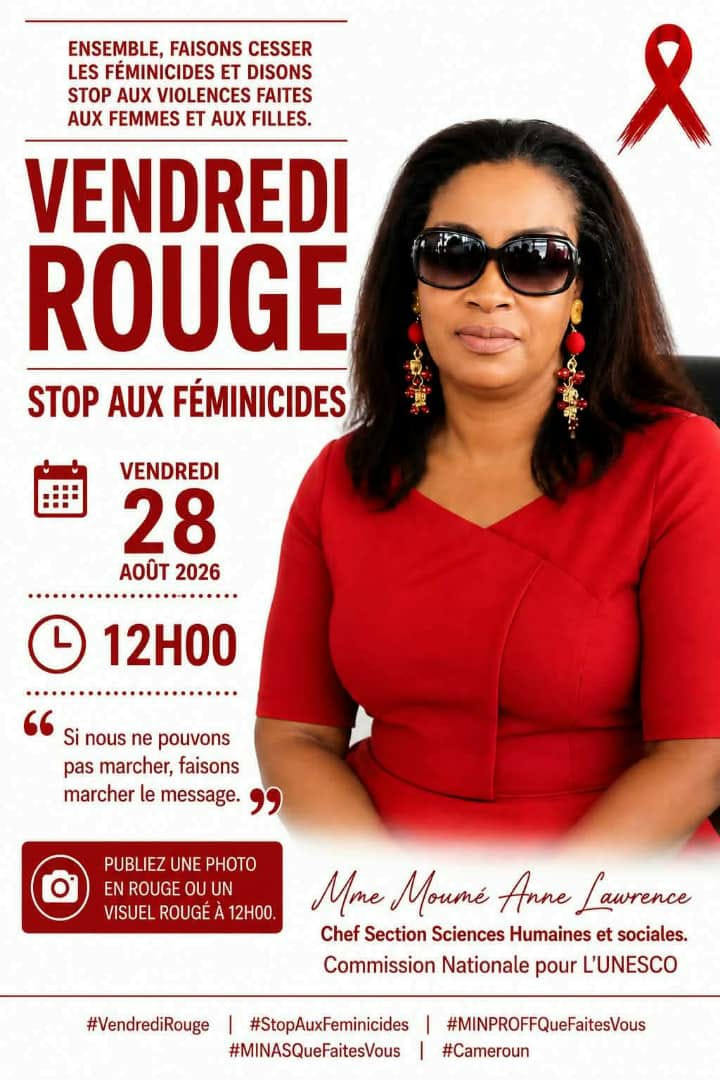
Turning Women’s Rights into Reality.
Cameroon has national, regional and international commitments concerning women’s rights. But principles and commitments have little meaning if women continue to live in fear.
The real challenge is to turn women’s rights from principles on paper into rights experienced in everyday life.
This requires a society in which violence against women is no longer dismissed as a private matter, where victims are taken seriously, and where every woman knows that her life and dignity matter.
The rise in femicides therefore raises a question that goes beyond each individual case:
What kind of society do we want to build for women in Cameroon?
A society in which women are expected to learn how to live with fear?
Or a society in which every woman’s right to live in safety and dignity is recognized as fundamental and non-negotiable?
The numbers should alert us. The stories should move us. But the ultimate issue is deeper:
Every woman has the right to live.
Xandra Beyene
Infos+
Media coverage : (+237) 694810981


Commentaires 0
Aucun commentaire pour le moment. Soyez le premier à réagir !
✍️ Laisser un commentaire